Alfa Laval needed a way to give customers earlier visibility into heat exchanger maintenance in order to reduce costly breakdowns and creating an opportunity for a premium preventive maintenance service.
My role
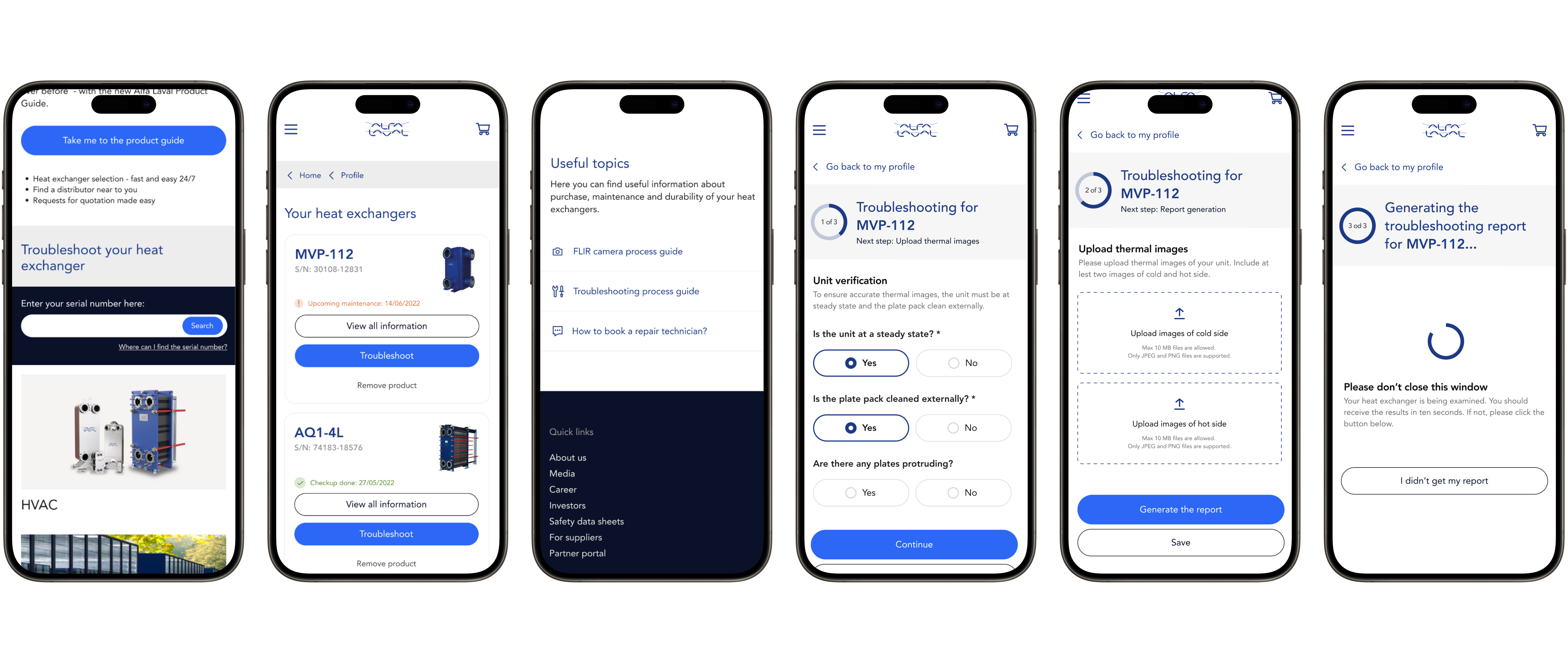
I led the design of an MVP progressive web app (PWA) that walks users through a thermal imaging scan and generates an automated diagnostic report powered by AI.
My work was heaviest in the discovery phase: defining the problem space, aligning stakeholders with often competing priorities, and making sure the solution we built was grounded in real user behaviour rather than assumptions.
User groups
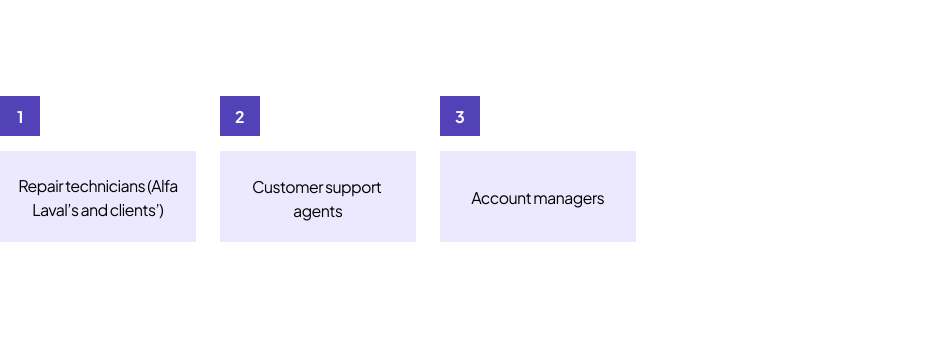
One of my early decisions was to push for clarity on the user landscape before any design work began. The app would touch a broader set of people than initially acknowledged: repair technicians with deep domain expertise, customer support agents who act as a bridge between customers and field teams, and account managers in conversation with the technical operators. Each had different mental models and different definitions of "useful."
Getting stakeholders to see this early was important: it prevented us from designing a tool optimised purely for one persona and creating friction for everyone else.
Discovery: starting with empathy, not solutions
Aligning stakeholders and defining direction
To kick off the project, I facilitated a discovery workshop with Alfa Laval's key stakeholders. Rather than jumping straight to requirements, I structured the session around empathy mapping — asking participants to step into the shoes of both technicians and customers. We traced how maintenance was currently being handled, where the process was breaking down, and what support people actually needed from a digital tool.
This exercise surfaced gaps the stakeholders hadn't articulated before. Certain handoff points in the existing process were unclear even internally — the team knew something wasn't working but hadn't pinned down exactly where. Making those blind spots visible in the room created shared understanding and helped me build buy-in for the direction we eventually took.

The core design challenge was making a technically complex process feel intuitive across very different user types. I defined a unified PWA flow connecting four steps:
Entering the Alfa Laval app
Scanning or uploading thermal images from a third-party camera app
Generating an automated health report
Contacting customer support if needed
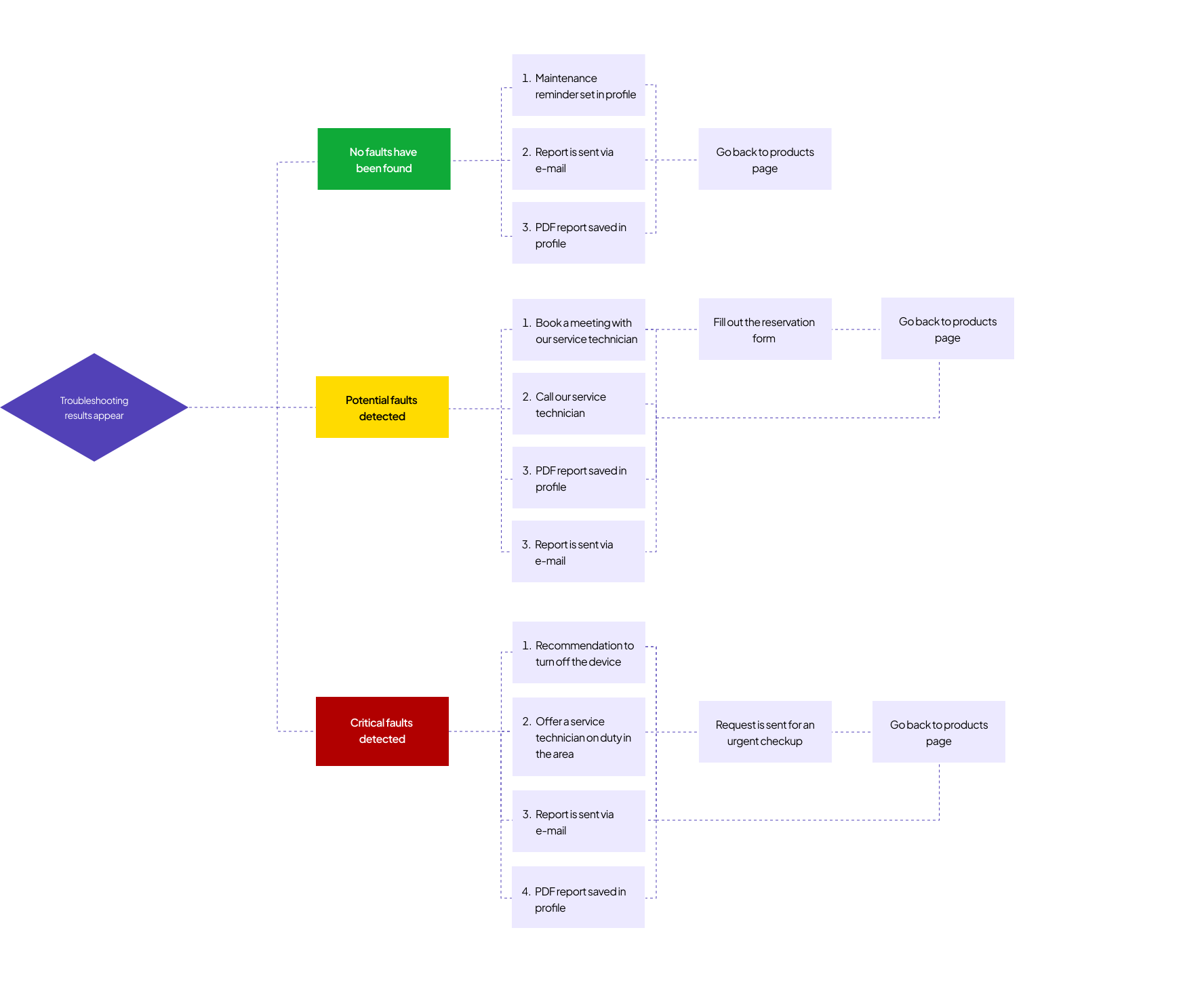
To make report results immediately actionable, I introduced a traffic light system into the backend logic:
🟩 No faults found
🟨 Potential faults detected
🟥 Critical faults detected
The goal was to reduce cognitive load at the point of decision — technicians shouldn't have to interpret raw data under pressure. This framing also made the value of the service legible to less technical stakeholders, like account managers, who needed to explain it to customers.
Pushing for user testing
This was probably the most significant moment where I had to advocate against the default.
The client's initial position was that user testing wasn't necessary. My view was different: we had a product touching multiple user types, with a flow that included unfamiliar steps like thermal camera integration and AI-generated diagnostics. Shipping without testing felt like a real risk.
After the discovery workshop — where it had become clear that certain touchpoints were missing and that even internal teams couldn't fully articulate the user journey — I made the case again. The argument landed. The client agreed to bring in their customer support team, who worked daily with the repair technicians we couldn't access directly.
This was the right call. The testing revealed things we wouldn't have caught otherwise. Navigation and logic were broadly well received, but technicians (surfaced through the support team's proxy knowledge) needed clearer guidance around the thermal camera: what to do when a connection failed, and whether to capture photos inside the app or upload them separately.
Iterations based on real feedback
Bridging PWA and Alfa Laval product guide
The insights from testing directly shaped the next iteration:
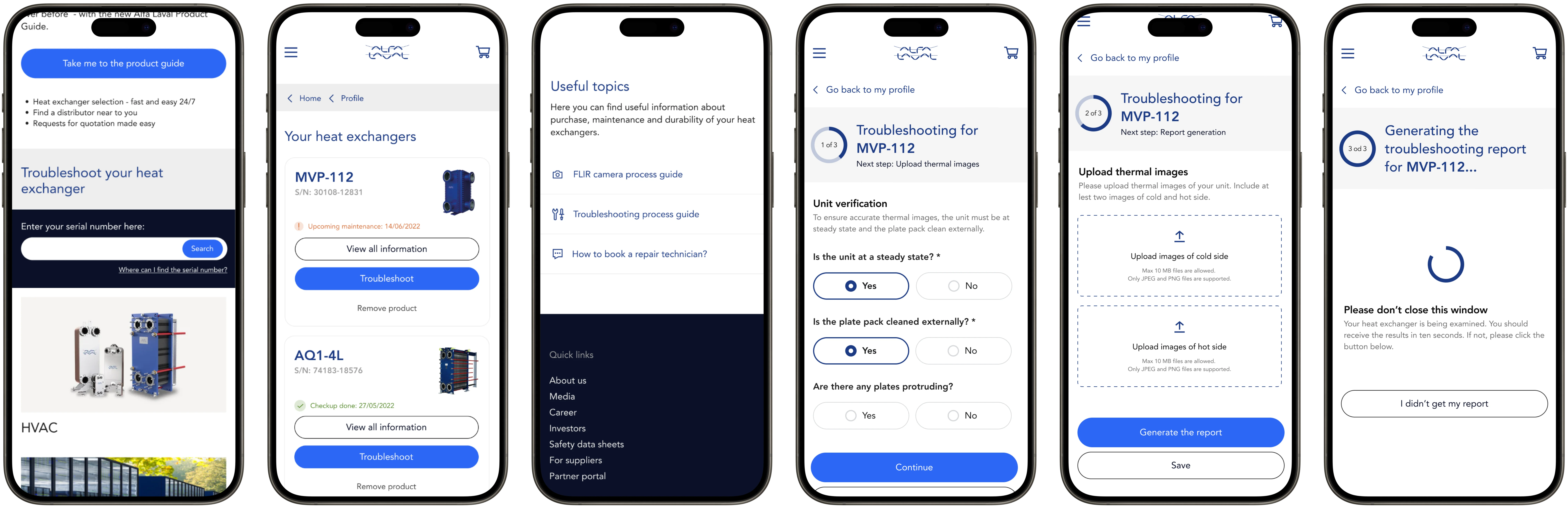
Serial number fallback: Users can manually enter a serial number if it's not found in the database — a gap that would have caused drop-off
Expanded products page: Now shows all owned units, completed checkups, and upcoming maintenance reminders in one view
Fallback support flow: Ensures help is accessible at any point, reducing abandonment when something goes wrong
Simplified unit verification: Guided users through key questions and photo uploads to generate more accurate reports
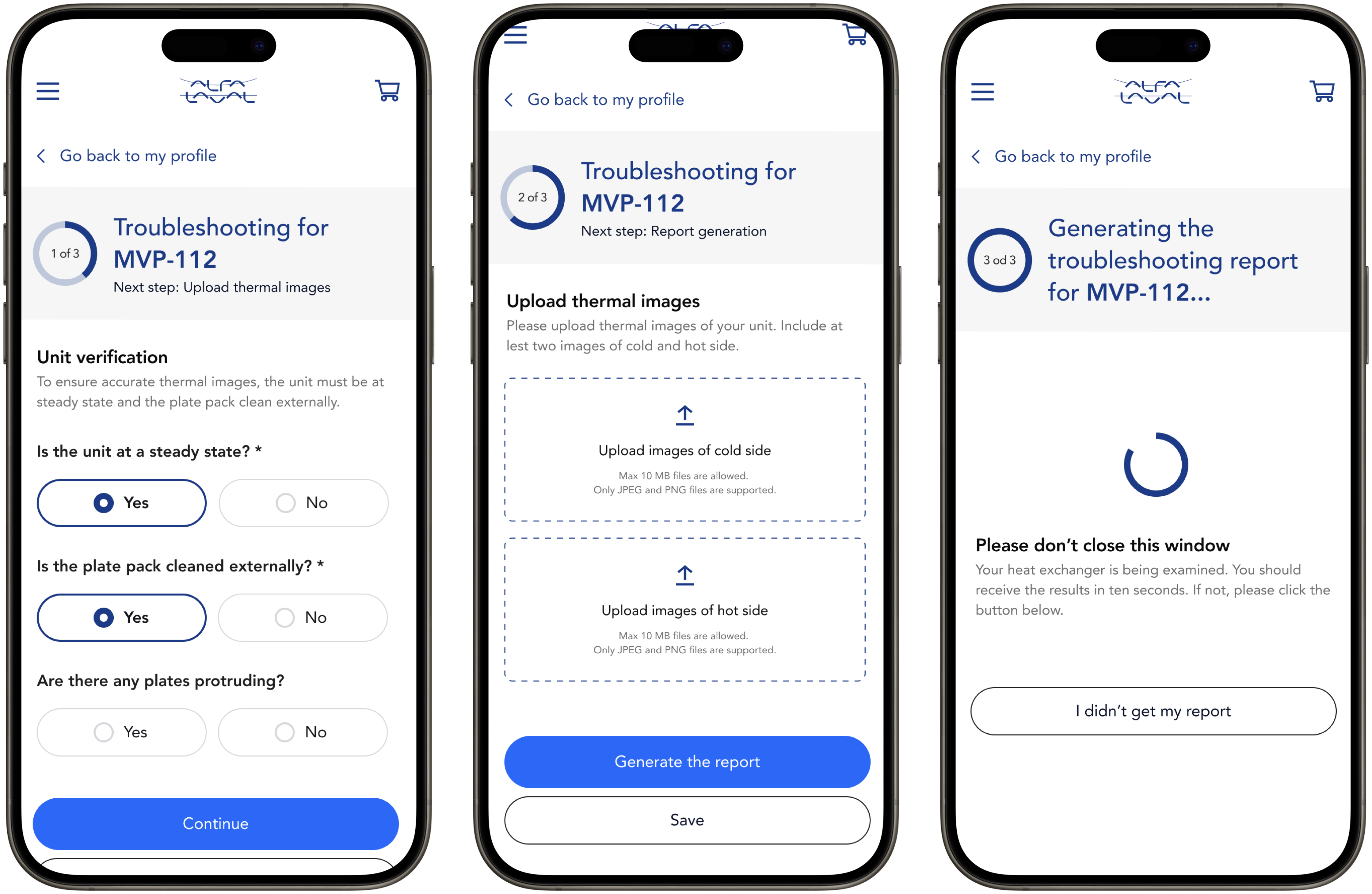
In the flow, we designed a simple yet effective process for generating a troubleshooting report.
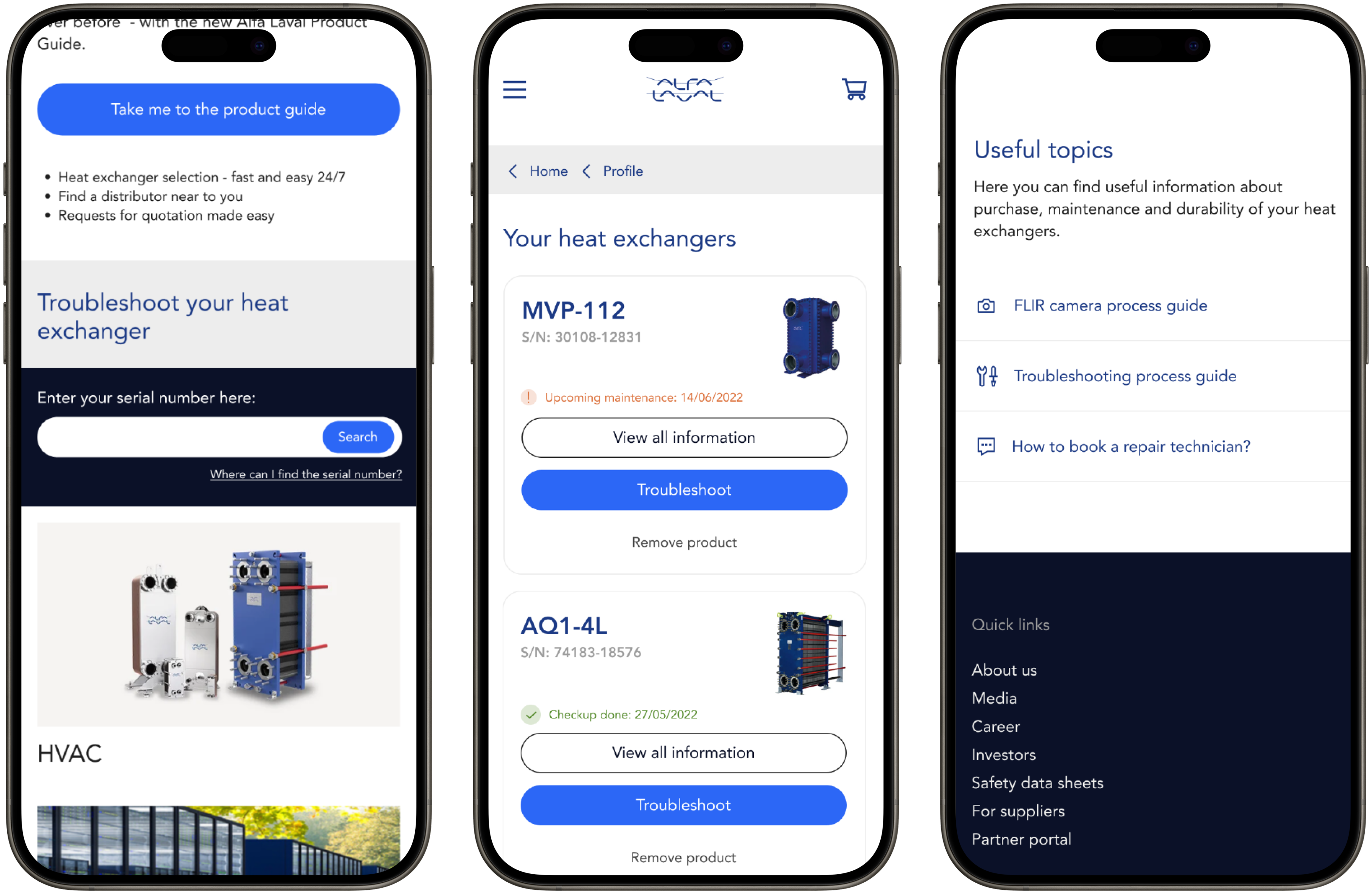
Once the report was created, the customer would receive clear instructions on how to proceed, depending on the condition of the heat exchanger.
What I took from this project
Customer support agents are underrated research participants.
They sit at the intersection of product, customer, and field operations — and they often carry the clearest picture of where things break down. Getting access to them unlocked insights that interviews with technicians alone might not have surfaced.
Discovery work has to earn its space.
The client didn't start out convinced of its value. The empathy mapping exercise created visible output that changed the conversation — it gave stakeholders something concrete to respond to, not just a designer asking for more time. That's a pattern worth repeating.
And the story didn’t end there…
Beyond the solutions presented here, the project included important dimensions such as cross-functional collaboration, stakeholder alignment, and overcoming team-level challenges. I’m happy to share more about these behind-the-scenes learnings :)